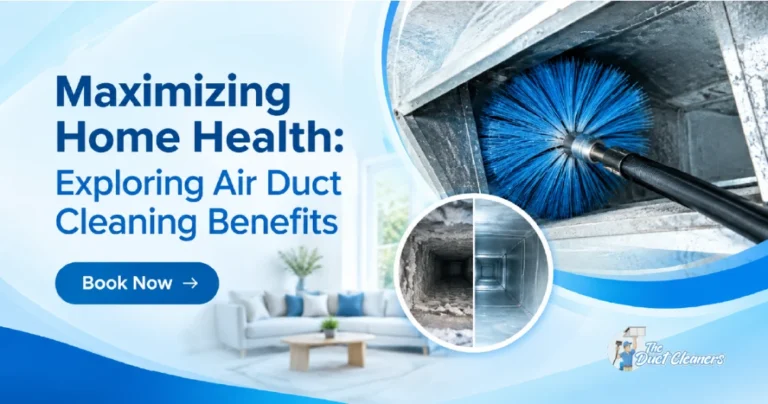



Dust after duct cleaning does not automatically mean you need to pay for the same service again. Before deciding on another cleaning, find out what is supplying the dust and whether the ductwork is actually dirty.
A Tarrytown homeowner contacted The Duct Cleaners in early September after another company had cleaned their ducts a few months earlier. Dust kept collecting on the furniture, and the homeowner was ready to book a second cleaning.
Stacey asked them to wait for an inspection. The supply-duct camera inspection showed a reasonable cleaning. The findings that changed the recommendation were on the return side: a gap at the filter slot and an open seam in the attic return plenum.
Based on field accounts from Stacey and Chris, technicians at The Duct Cleaners.
What the Tarrytown inspection found
The filter slot at the air handler had a gap of approximately half an inch on one side. In the attic, a seam in the return plenum, the box carrying return air toward the equipment, had opened.
Stacey also observed material identified as attic insulation fibers inside the return. Together, the gap, open seam, and visible material supported an explanation for unfiltered air entering the system.
“The ducts were actually fine. The camera showed a reasonable cleaning. The problem was the return.”
— Stacey, The Duct Cleaners
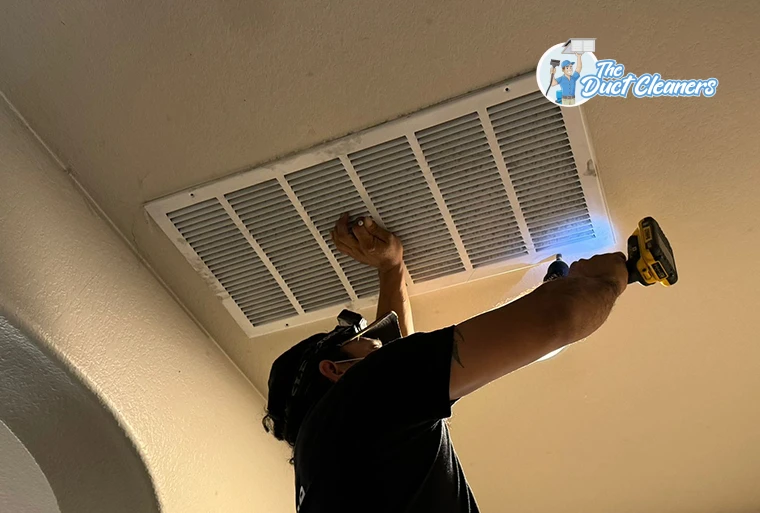
The recommendation followed those findings. Chris reported that the team sealed the return seam and filter-slot gap and fitted a correctly sized filter. He said the completed work was documented with photos.
This was not a finding that the previous cleaning company had performed a poor job. Stacey’s inspection supported the opposite conclusion about the visible supply ducts. The remaining problem required attention elsewhere.
Four checks for dust after duct cleaning
1. Check the filter’s fit, condition, and suitability
Stacey starts at the filter. A label showing the right filtration rating is only part of the check: the filter also needs to fit its intended opening and be seated correctly.
“I check fit, MERV rating, and whether it’s seated so air can’t go around it.”
— Stacey, The Duct Cleaners
MERV describes how effectively a filter captures specified particle sizes. It does not describe how well that particular filter fits your equipment. Air that bypasses the filter does not pass through its filtering material.
In Tarrytown, the visible gap made fit and sealing central to the investigation. Simply buying a more expensive filter would not have explained or corrected the open return seam.
When choosing a replacement filter, use the size and type specified for your equipment. The EPA’s MERV guidance recommends choosing filtration that the system fan and filter slot can accommodate. Ask an HVAC professional if you are uncertain about a higher-efficiency option.
2. Inspect the return-air path
The return side carries air back toward the heating and cooling equipment. An opening in an attic return can provide a route for attic air to enter that path.
Stacey checks accessible return seams, connections, and the inside of the return for evidence that helps explain the complaint. On this job, the open seam and visible fibers supported investigating the return rather than immediately repeating supply-duct cleaning.
The location matters. A photo of dust somewhere in an attic is different from a photo showing material inside the return near a defect. Ask the technician to explain how the location of the evidence supports the recommendation.
A visible defect can establish a need for attention without establishing exactly how much air is leaking through it. The Tarrytown account does not include a leakage test, so we are not assigning an airflow quantity to that seam.
3. Look inside the supply ducts before recommending another cleaning
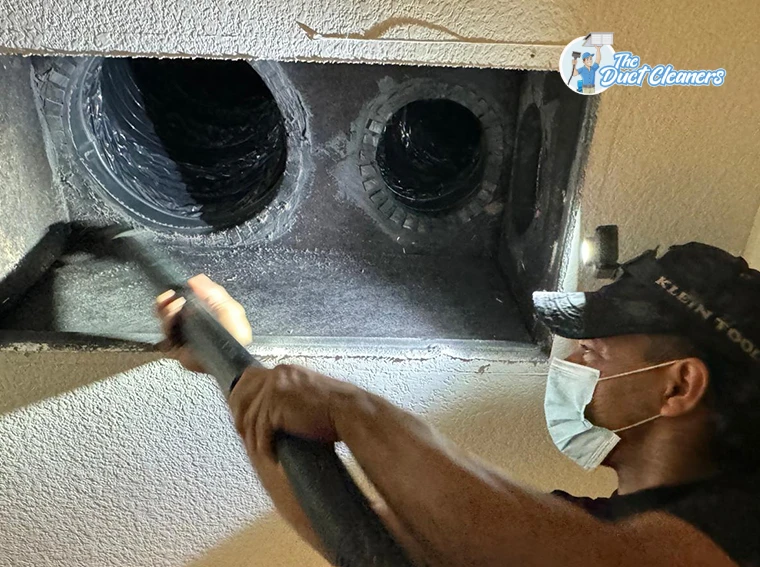
Stacey inspected the supply side with a camera. The visible sections looked reasonably clean, which helped determine that repeat cleaning was not the first step for this home.
An inspection has limits. A camera view documents the areas it reaches; it is not an indoor-air-quality test or proof of conditions in every inaccessible section. The useful question is what the technician saw, where it was seen, and how it relates to the customer’s complaint.
For this visit, the visible supply condition and the return-side findings pointed toward repairing the incoming-air path. Had the inspection found significant remaining debris, the recommendation could have been different.
Our air duct cleaning service addresses contamination within the agreed cleaning scope. An inspection helps establish whether that service matches the problem you are trying to solve.
4. Ask what else is happening in the home
Stacey asked about nearby construction, pets, and recent remodeling. The homeowner did not report those factors. That information helped put the physical findings into context, although a conversation alone cannot eliminate every possible dust source.
Household activities and outdoor particles can contribute to dust independently of duct condition. The EPA’s guidance on air duct cleaning explains that dirty ducts are only one possible particle source and that routine cleaning is not a universal recommendation.
For another property, the history might point toward a different inspection. Recent sanding, an incorrectly fitted replacement filter, or a change in where dust appears would each be useful information to share.
The goal is to connect a recommendation to the evidence in your home. A list of possible causes is a starting point, not a diagnosis.
What changed after the work
Chris’s account distinguishes the work performed from the result reported later:
| Evidence | What this case supports |
|---|---|
| Inspection findings | A filter-slot gap, an open return-plenum seam, and visible fibers in the return. |
| Work reported and photographed | Sealing the seam and filter-slot gap, and fitting a correctly sized filter. |
| Three-week customer follow-up | The homeowner reported needing to dust surfaces less frequently. |
| Measurements not available | No indoor particle counts, quantified dust reduction, or measured health outcome. |
“What I can’t claim is a measurement of indoor dust, because we don’t do particle counts.”
— Chris, The Duct Cleaners
The homeowner’s feedback was encouraging, but it remains customer-reported feedback. It does not establish a percentage reduction, prove that all dust was eliminated, or predict the outcome in another house.
This distinction is especially useful when comparing service claims. A photograph can document a repaired seam. A customer’s report can describe their experience afterward. Neither should be relabeled as a particle-count measurement.
What to record before an inspection
If you are seeing dust after duct cleaning, bring the previous service paperwork if you have it. Knowing what was included makes the next inspection more productive.
A short record can help:
- Timing: When was the cleaning, and when did you notice the dust returning?
- Location: Is it throughout the home, concentrated in one room, or collecting near a particular opening?
- Filter history: What filter was installed, and has the size or type changed recently?
- Other changes: Has there been remodeling, nearby construction, or other work on the HVAC system?
- Previous findings: Were any damaged or inaccessible sections noted on the original invoice?
Photos of the same surface over time may help describe the complaint. They do not identify what the particles are, so avoid treating color or appearance alone as a diagnosis.
You can check an accessible filter according to the equipment instructions. Leave attic duct inspection and repairs to someone qualified for that work. Do not seal unfamiliar equipment openings or panels based only on where you see a gap.
For questions involving the air handler or other components, our HVAC cleaning service page explains the broader service. The inspection should identify whether cleaning, repair, or another type of attention is appropriate.
Frequently asked questions
Is some household dust expected after the ducts are cleaned?
Yes. Cleaning ductwork does not remove every source of household dust. The question is whether there is a persistent pattern or a documented defect that needs investigation. Surface dust alone is not proof that the cleaning failed.
Should I immediately book another duct cleaning?
Ask for an inspection and a review of the original scope first. Another cleaning may be justified if contamination remains, but it will not repair a filter bypass or an open return seam. The Tarrytown homeowner’s recommendation changed once those defects were found.
Will a higher-MERV filter solve dust after duct cleaning?
Not by itself if air is bypassing the filter or entering through a separate defect. Fit, sealing, and compatibility with the equipment matter alongside filtration efficiency. Have the system assessed before choosing a filter solely by its rating.
Does a clean supply duct prove that the return is clean and sealed?
No. They are different parts of the air path. In this case, the supply inspection looked reasonable while the return inspection revealed the actionable defects. Each relevant area needs its own assessment.
Did sealing the return eliminate dust in this Tarrytown home?
The customer reported less frequent dusting three weeks later. No particle-count testing was performed, and we are not claiming a dust-free home. The documented work and the customer’s feedback support a narrower, more accurate account.
Find the source before repeating the service
The Tarrytown visit began with a request for another cleaning. Inspection led to a different recommendation: address the filter-slot gap and return seam, then follow up on the customer’s experience.
If your home remains dusty after duct cleaning, book an inspection with The Duct Cleaners. Share the previous cleaning scope and describe what has changed so we can investigate the source before recommending more work.